Pool Draining Services in Chandler, AZ


When your pool water has gone cloudy, stained, or chemically out of balance no matter how much you shock it, a full drain and refill is often the only real fix. SolWater Pools handles pool draining services for homeowners across Chandler and the East Valley, from the drain-down itself to the acid wash and the chemical startup that follows. We do it the way Chandler’s water district actually requires, not the way a garden hose down the driveway suggests.

Call (480) 626-2825
Get a Quote Today

When Does a Chandler Pool Actually Need to Be Drained?

A Chandler pool typically needs a full drain when total dissolved solids (TDS), cyanuric acid (CYA), or calcium hardness climb high enough that normal chemistry can no longer keep the water clear, even with fresh chlorine and regular brushing. These three readings tend to creep up together here because our water source is already mineral-heavy before a single chemical goes in, and because so many Chandler pools run stabilized chlorine or tablets year-round in a climate that barely gives the water a winter break.

Three patterns show up again and again in the pools we service around Ocotillo, Fulton Ranch, and the neighborhoods off Riggs Road:

  • High TDS from years of chemical additions. Every bag of shock, bottle of algaecide, and jug of acid adds dissolved solids that never leave on their own. Once TDS gets too high, chlorine stops working efficiently no matter how much you add.
  • Cyanuric acid (CYA) lock. Stabilized chlorine products build CYA over time, and CYA that climbs too high effectively handcuffs your chlorine, a condition pool professionals call chlorine lock. Arizona’s near-constant sun exposure means many local pools run stabilized products heavily, which speeds this up.
  • Calcium scaling. Chandler’s water supply runs hard, and hard-water scaling shows up as a rough, chalky texture on plaster, tile lines, and equipment. Past a certain point, brushing and chemical adjustment can’t dissolve it, and the surface needs to be exposed and treated directly.

If your water still looks tinted or feels off after balancing chemistry twice in a row, that is usually the signal it is time for a drain rather than another round of shock.
Our Draining Process, Done to Chandler’s Code

Chandler’s stormwater rules are specific, and getting a drain-down wrong can mean water in the street, a call from the city, or worse, damage to your own plumbing. Before we drain a single gallon, we confirm where that water is legally allowed to go and how fast it can safely leave your property.

  1. Locate the discharge point. The City of Chandler requires that pool water be kept on private property or routed into the sanitary sewer cleanout, not run down the driveway into the street or storm drain. Pipes hard-plumbed to discharge off the property are prohibited under city code. We find your sewer cleanout, usually a capped pipe close to the home, and confirm it’s the right access point before hooking anything up.
  2. Set a safe flow rate. Dumping water into a sewer cleanout too fast can back it up into showers and tubs inside the house. We keep discharge at a conservative rate, checking indoor drains as we go, rather than just opening the pump and walking away.
  3. Protect the shell from hydrostatic pressure. An empty pool with a high water table underneath it, common after Chandler’s monsoon season, can actually pop out of the ground. We monitor groundwater conditions and never leave a shell fully empty and unattended longer than necessary, particularly on older gunite pools where the shell has less flex.
  4. Protect equipment and surfaces during the draw-down. Pumps, cleaner lines, and skimmers can run dry and burn out if the water drops faster than we’re managing it. We shut down and adjust equipment as the level falls instead of leaving the system running blind.

This is also the point where an acid or chlorine wash gets scheduled, since it only makes sense once the pool is fully drained and the surface is exposed.

Schedule Pool Draining

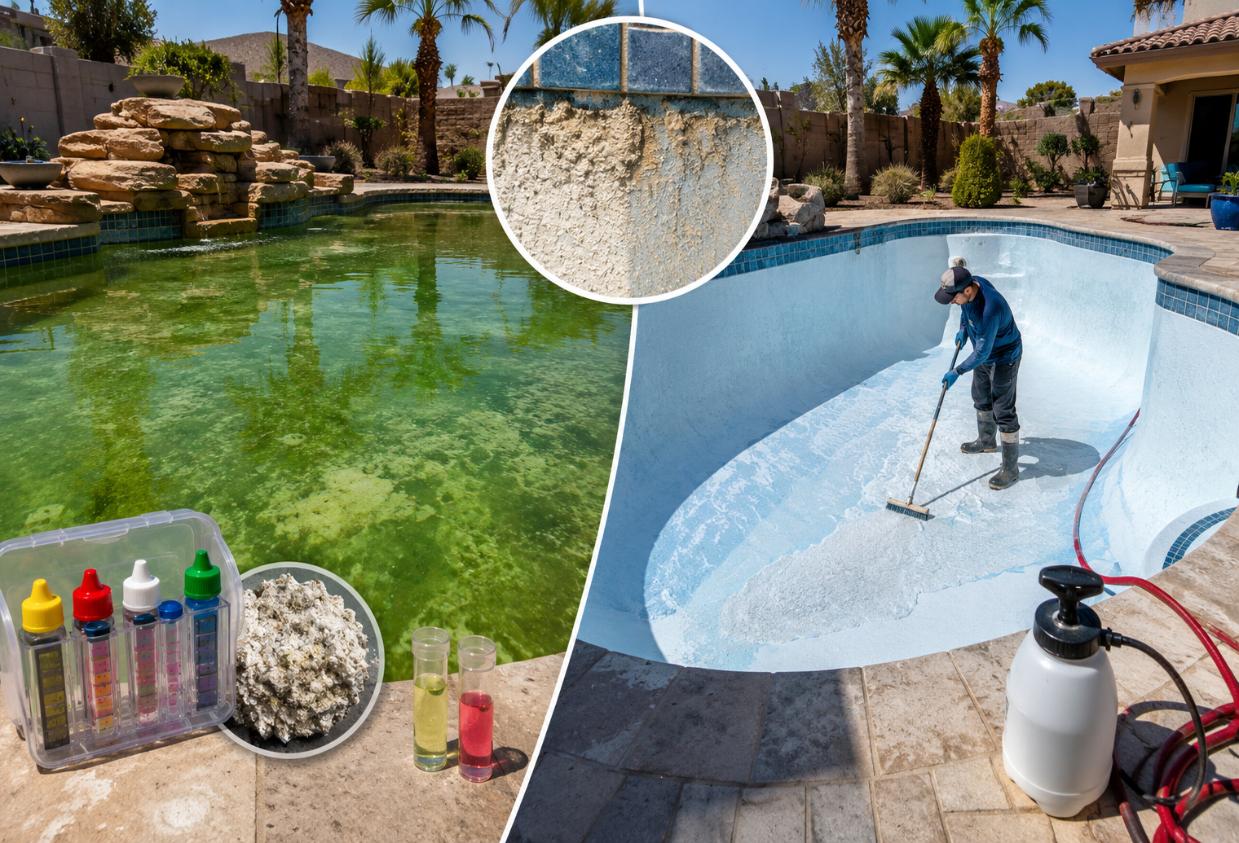
Pool condition before cleaning and an emptied pool during cleaning

What Does an Acid Wash Actually Remove?

An acid wash removes the thin layer of algae staining, mineral buildup, and surface discoloration that sits on top of your plaster once the water is gone, restoring a lighter, more even finish underneath. It is a light chemical etching, not a resurfacing, so it works on staining and buildup but won’t fix cracked or badly degraded plaster.

Once your pool is drained, we walk the shell and treat what we actually find rather than running a one-size wash on every job:

  • Algae and organic staining that lingers in shaded corners and steps, especially on pools that went green before the drain.
  • Copper and metal staining from older heaters, well water fill, or certain algaecides, which shows up as blue-green or brown streaking on plaster.
  • Calcium and mineral scale along the waterline tile and shell surface, the direct result of Chandler’s hard water depositing minerals over months or years.

We rinse and neutralize the surface fully before refill starts, so no residual acid carries over into your fresh water.

How Long Does It Take to Refill and Balance a Drained Pool?

Refilling an average residential pool typically takes anywhere from 24 to 48 hours depending on your water pressure and pool size, and the water isn’t swim-ready until chemistry has been tested and adjusted after the fill completes. Filling too fast can strain your water pressure and utility line, so we pace it and monitor as it goes rather than leaving a hose running unattended for two days straight.

Once the pool is full, we run startup chemistry in a specific order:

  • Alkalinity first, since it stabilizes pH and keeps later adjustments from swinging.
  • pH second, brought into the 7.4 to 7.6 range where chlorine works efficiently and swimmers stay comfortable.
  • Calcium hardness checked against fill water, since Chandler’s tap water already carries meaningful mineral content before you’ve added anything.
  • Sanitizer and stabilizer brought up last, once the foundational numbers are steady, so chlorine isn’t wasted fighting an unbalanced base.

We test again a few days after refill, since new water and a fresh plaster surface can shift slightly as everything settles.

Request a Drain and Refill

Water test kit beside a swimming pool

When Do You Need Emergency Pool Draining?

Emergency pool draining is typically needed after storm flooding pushes debris and contaminants into the water, after a chemical overdose creates an unsafe swimming environment, or when a plumbing or equipment failure is actively pumping water where it shouldn’t be. In these cases, waiting for a routine appointment can mean property damage or a longer chemical recovery later.

Monsoon season is the most common trigger we see across the East Valley. A heavy storm can dump enough runoff, dust, and debris into an uncovered pool to overwhelm the chemistry within hours, and standing floodwater near the equipment pad can be a safety issue on its own. If your pool has taken on storm water, or you suspect an equipment leak is adding water faster than it should be, call us directly rather than waiting out the week.

Why Chandler Homeowners Call SolWater Pools for Draining

Spencer, our owner, is your direct point of contact from quote to completion, and Nate, our lead technician, has managed drain-and-refill jobs across pool types you’ll find throughout the East Valley, from older gunite shells in established Chandler neighborhoods to newer fiberglass and vinyl installs in communities off Riggs Road. We treat a drain job as a full-scope project: discharge compliance, shell protection, the acid wash if your surface needs it, and a proper chemical startup, not just “open the valve and leave.”

We’re not a drain-only outfit that disappears after the water’s gone. Because we also handle weekly pool service, pool maintenance, and equipment repair throughout Chandler and Gilbert, we can fold your drain and refill into an ongoing service plan so the pool stays balanced well after the acid wash has cured.

Get a Pool Draining Quote

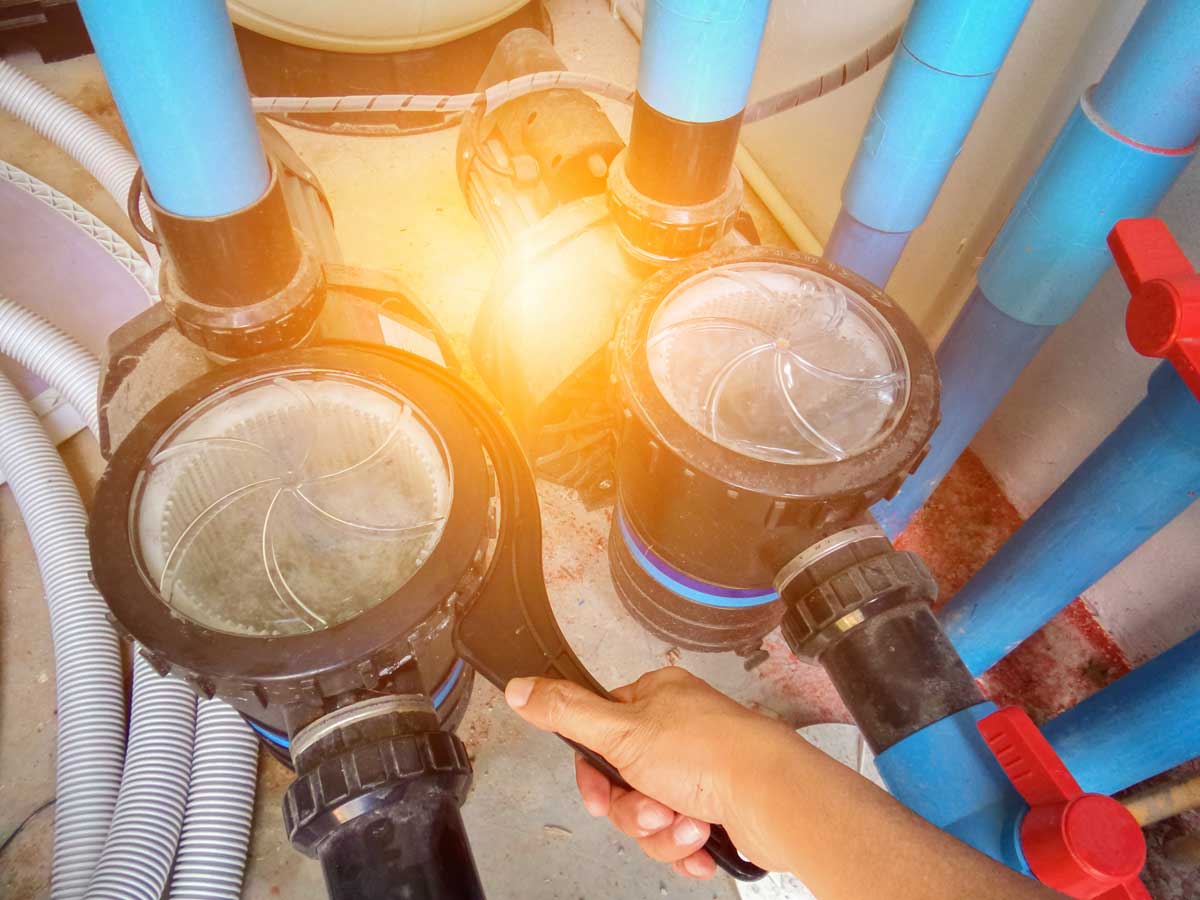
Pool plumbing and equipment inspection

Pool Draining Questions from Chandler Homeowners


Most Chandler pools need a full drain every three to five years, though pools that run stabilized chlorine heavily or sit under heavy sun exposure year-round may need it closer to every two to three years. The right interval depends on your TDS, CYA, and calcium readings rather than the calendar, so we test before recommending a drain.


No, discharging pool water into the street or storm drain in Chandler is not allowed. City code requires that discharge be kept on private property or routed into the sanitary sewer cleanout, and any exception for street drainage has to be requested through the city directly.


A pool can be damaged during draining if it’s left empty with a high water table underneath it, a risk that rises after Chandler’s monsoon season, since groundwater pressure can push against an empty shell and cause it to shift or “pop.” That’s why we monitor conditions and avoid leaving a shell empty longer than the job requires.


No permit is required to drain a pool in Chandler as long as the water is discharged into the sanitary sewer cleanout or contained on your own property. A permit only becomes relevant if you’re requesting an exception to drain into the street, which the city handles as a separate request.


Ready to Reset Your Pool?

If your water’s stubbornly cloudy, stained, or just off no matter what you add to it, a proper drain, acid wash, and refill from a team that knows Chandler’s code and its water is the fastest way back to clear. Reach out to SolWater Pools and we’ll walk you through what your pool actually needs.

Call (480) 626-2825
Get a Quote Today