

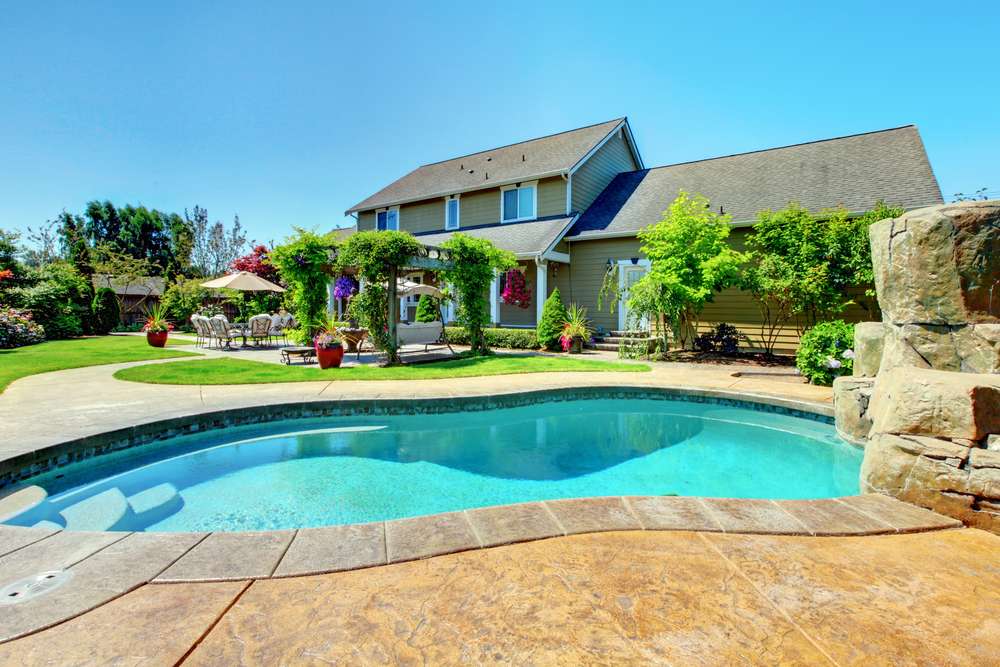
If you own a pool in Chandler, watching the water level drop during an Arizona summer can be unsettling. Triple-digit heat, intense sunlight, dry air, and wind can remove a surprising amount of water from an exposed pool, but continuous water loss can also point to a leak.
The challenge is figuring out which one you are dealing with before a small pool problem becomes a larger one.
Quick answer: Arizona heat can cause significant pool water loss through evaporation, especially during hot, dry, windy conditions. Normal evaporation generally affects the entire pool gradually and changes with the weather. A leak tends to produce more consistent or excessive water loss, sometimes accompanied by wet areas, falling water levels despite cooler conditions, air in the system, or difficulty maintaining pool chemistry. A simple bucket test can help Chandler homeowners separate evaporation from a possible leak.
What Chandler pool owners should know
-
Evaporation increases when high temperatures, low humidity, wind, and direct sunlight occur together.
-
Chandler’s long, hot summers can make routine evaporation much more noticeable than during cooler months.
-
Monsoon-season humidity can temporarily change evaporation rates, so water loss will not necessarily remain consistent throughout summer.
-
A pool that loses noticeably more water than a bucket of pool water under the same conditions may have a leak.
-
Automatic fill systems can hide water loss, making an unexpectedly high water bill or changing pool chemistry an important clue.
Why Does Arizona Heat Cause So Much Pool Water to Evaporate?
Arizona heat accelerates pool evaporation because hot water, intense solar exposure, dry air, and wind all encourage water to move from the pool into the atmosphere. Around Chandler and the East Valley, these conditions can persist for long stretches, making water loss particularly noticeable during summer.
A swimming pool is essentially a large exposed body of water. As its surface warms, water molecules escape into the air. Dry air can accept more moisture, while wind carries humid air away from the pool surface and replaces it with drier air.
Conditions can vary considerably even within the Phoenix metropolitan area. A pool in an exposed backyard may lose water faster than one protected by walls, landscaping, or neighboring structures. Pools with fountains, waterfalls, spillovers, or other features also expose more water to moving air.
For Chandler homeowners, the important point is that evaporation is not a fixed daily measurement. Weather, pool temperature, shade, wind exposure, and pool use all affect it.
SolWater Pools helps local pool owners evaluate pool conditions when ordinary evaporation begins looking more like unexplained water loss. From this point forward, we focus on what the pool itself is telling us rather than assuming every falling water level is caused by Arizona heat.
What Do Local Pool Owners See During Extreme Heat?
During extreme East Valley heat, pool owners commonly see faster water-level changes, increased refill needs, and greater attention required to maintain normal pool conditions. These observations alone do not prove that a pool leaks because evaporation naturally changes with Chandler’s weather.
One useful comparison is how the pool behaves from season to season. Water loss that becomes pronounced during the hottest, driest periods but slows when temperatures moderate may be consistent with evaporation.
Pool use matters too. Splash-out from children, pets, swimmers, and frequent gatherings can lower the water level independently of evaporation or leaks.
The pattern matters more than a single observation.
What Are the Warning Signs of a Pool Leak?
Pool leak warning signs include unusually persistent water loss, unexplained wet areas, equipment symptoms, and water loss that appears excessive compared with evaporation. Chandler homeowners should pay particular attention when several of these signs occur together.
Watch for:
-
The pool requires refilling more frequently than weather conditions seem to explain.
-
Water continues dropping at a similar pace during cooler or more humid weather.
-
Damp or unusually wet soil develops near the pool, deck, plumbing, or equipment.
-
Cracks or separation become visible around the pool structure or fittings.
-
Air repeatedly enters the circulation system.
-
Pool chemistry becomes unusually difficult to maintain because fresh water is continually replacing treated water.
-
An automatic fill system appears to run much more frequently than expected.
-
Water loss changes depending on whether the circulation equipment is operating.
One warning sign does not automatically mean a leak exists. A pattern of unexplained symptoms deserves closer investigation.
How Can You Tell Evaporation From a Pool Leak?
A bucket test compares water loss inside the pool with water exposed to the same weather, making it one of the simplest ways to distinguish evaporation from a possible leak. Chandler homeowners can perform this basic test before deciding whether professional evaluation is needed.
Place a bucket on a pool step and add pool water to the bucket. Adjust it so the water inside the bucket is approximately level with the surrounding pool water. Mark the water level inside the bucket and the pool level outside it.
Allow both to sit under the same weather conditions while avoiding unusual splash-out or added water.
Then compare the changes.
If the pool and bucket lose roughly similar amounts, evaporation is a likely explanation. If the pool drops noticeably more than the water inside the bucket, additional water may be escaping somewhere else.
Automatic fillers should be accounted for during testing because they can conceal the pool’s actual water loss.
When Should You Call a Pool Professional?
Call a pool professional when water loss consistently exceeds what your evaporation comparison suggests, when visible symptoms appear, or when you cannot identify the source safely. In Chandler, acting on persistent unexplained water loss can prevent unnecessary refilling and help identify problems before they affect other pool components.
Homeowners can safely monitor water levels, inspect visible equipment, look for wet areas, and conduct a bucket test.
DIY investigation should stop before dismantling plumbing, excavating around buried lines, or making structural repairs without knowing the source of the problem.
Professional evaluation becomes especially useful when the water loss is repeatable but the cause is not visible.
What Commonly Causes Pool Water Loss in Chandler?
The most common explanations for pool water loss around Chandler include evaporation, splash-out, plumbing problems, equipment leaks, and issues involving the pool shell or fittings. Arizona’s climate makes evaporation the obvious first suspect, but it should not automatically receive the blame.
1. Evaporation: Hot, dry, windy weather continuously removes exposed water.
2. Splash-out: Frequent swimming and active pool use can noticeably lower the water level.
3. Equipment leaks: Pumps, filters, valves, connections, and nearby plumbing can develop visible or intermittent leaks.
4. Underground plumbing problems: A damaged line can lose water without producing an obvious puddle beside the equipment pad.
5. Pool shell or fitting issues: Water can sometimes escape around penetrations, fittings, cracks, or other vulnerable areas.
East Valley soil conditions and long-term property movement can also make changes around a pool worth investigating rather than ignoring.
How Can Chandler Homeowners Reduce Unnecessary Water Loss?
Chandler homeowners can reduce unnecessary water loss by monitoring pool levels, maintaining equipment, limiting excessive splash-out, and using a properly fitted pool cover when practical. Consistent observation is particularly useful from late spring through the intense summer months.
Check visible plumbing and equipment periodically for moisture. Pay attention to how often an automatic fill system operates. After monsoon storms, inspect the pool and equipment area for debris or changes that could affect normal operation.
A cover can reduce the amount of exposed water available for evaporation, although the right type and safe use depend on the pool and household.
Most importantly, establish what is normal for your pool. A homeowner who knows the pool’s usual behavior can recognize an unusual change much sooner.
What Results Should You Expect After Finding the Cause?
Once the cause of water loss is identified, homeowners can make a more informed decision about monitoring evaporation, adjusting maintenance, or addressing a confirmed pool problem. The goal is not to eliminate normal evaporation in Arizona but to stop treating abnormal water loss as an unavoidable part of summer.
If evaporation is responsible, monitoring and water-saving practices may be sufficient. If a leak or equipment problem is found, the appropriate repair depends on its location and severity.
What Mistakes Make Pool Water Loss Harder to Diagnose?
The biggest mistakes are assuming every drop in water level is a leak or, at the opposite extreme, blaming every persistent problem on Arizona heat. Chandler’s climate makes both mistakes easy to make.
Mistake: Automatically blaming evaporation.
Consequence: A real leak may continue unnoticed.
Better approach: Compare pool loss with a controlled bucket test.
Mistake: Judging the pool from one unusually hot day.
Consequence: Normal weather-related variation can look alarming.
Better approach: Look for a repeatable pattern.
Mistake: Ignoring an automatic filler.
Consequence: The pool may look full while continuously consuming replacement water.
Better approach: Monitor how frequently the filler operates.
Mistake: Starting repairs before locating the problem.
Consequence: Time and money may be spent addressing the wrong component.
Better approach: Identify the likely source before choosing a repair.
What Is a Common Chandler Pool-Water-Loss Scenario?
A common Chandler scenario begins when a homeowner notices the pool needing more replacement water during a stretch of intense summer heat. Because evaporation is expected, the change may initially seem normal.
The homeowner performs a bucket comparison and discovers that the pool consistently drops more than the water inside the bucket. There may be no dramatic puddle or obvious broken component.
That does not identify the leak by itself, but it provides a useful reason to investigate further instead of continuing to refill the pool indefinitely.
What Pool Services Can Help With Unexplained Water Loss?
Pool inspection, equipment evaluation, and appropriate leak-related service can help determine why a pool is losing water and what should happen next. The correct solution depends on whether the source involves normal evaporation, visible equipment, plumbing, fittings, or another part of the pool system.
We can help homeowners evaluate suspicious pool behavior and determine an appropriate next step based on what is actually happening.
Should You Monitor the Pool Yourself or Call for Service?
DIY monitoring works well for establishing whether water loss is unusual, while professional service makes more sense when the loss persists or its source cannot be identified visually. This distinction helps local homeowners avoid both unnecessary service calls and prolonged water loss.
A bucket test, visual equipment check, and short monitoring period can provide useful information. Persistent unexplained loss, recurring equipment symptoms, or suspected underground or structural problems deserve professional attention.
Where Does SolWater Pools Serve Local Pool Owners?
We serve pool owners in Chandler and the surrounding East Valley service area. Homeowners in nearby communities such as Gilbert, Mesa, and Tempe experience many of the same desert heat, sun exposure, dust, and seasonal monsoon conditions that influence pool operation.
What Can Happen If You Ignore Persistent Pool Water Loss?
Ignoring persistent pool water loss can increase replacement-water use, disrupt water chemistry, and allow an underlying equipment or plumbing issue to continue. In the Chandler climate, automatically assuming summer heat is responsible can delay diagnosis when the pool is actually losing water somewhere else.
The objective is not to panic over normal evaporation. It is to recognize when the pattern stops looking normal.
FAQ
How much pool evaporation is normal in Chandler, AZ?
There is no single evaporation amount that is normal for every Chandler pool because weather and property conditions continually change. Temperature, humidity, wind, shade, water temperature, pool features, and exposure all affect water loss. Comparing the pool against a bucket under the same conditions is more useful than relying on a universal number.
Does Arizona summer heat automatically mean my pool is evaporating quickly?
Extreme Arizona heat can substantially increase evaporation, but temperature is only part of the equation. Dry air, wind, direct sunlight, pool temperature, and exposed surface area also matter. That is why two pools in the same Chandler neighborhood can experience different water-loss patterns.
Can monsoon weather change pool evaporation in Chandler?
Yes, monsoon conditions can change evaporation because humidity, wind, cloud cover, and temperature may shift quickly. A Chandler pool may behave differently during a humid storm pattern than during a hot, extremely dry period. Comparing water loss across changing weather conditions can therefore be misleading without considering those differences.
How do I perform a bucket test on my pool?
Place a bucket containing pool water on a pool step, mark the water levels inside and outside the bucket, and compare their movement after both experience the same conditions. If the pool level falls noticeably farther than the bucket water, the difference can indicate that something beyond evaporation deserves investigation.
Can an automatic pool filler hide a leak?
Yes, an automatic filler can conceal water loss by continuously replacing escaping water and keeping the pool near its normal level. Chandler homeowners with autofill systems may notice frequent filler operation or changes in water use before noticing a falling pool level. Monitoring the system can provide an important clue.
Does hard water prove my Chandler pool has a leak?
No, hard water by itself does not prove that a Chandler pool is leaking. Water chemistry and mineral conditions can be affected by multiple factors, including repeated replacement of evaporated water. A leak diagnosis should be based on water-loss patterns and physical evidence rather than mineral buildup alone.
Can wind increase pool evaporation in the East Valley?
Yes, wind can accelerate evaporation by moving moisture-rich air away from the pool surface and replacing it with drier air. An exposed East Valley backyard may therefore experience different water loss than a protected property nearby, even when both pools experience similar daytime temperatures.
When should I have unexplained pool water loss checked?
Have unexplained water loss checked when the pool repeatedly loses more water than an evaporation comparison suggests or when other warning signs appear. Wet areas, equipment symptoms, frequent autofill operation, or persistent water-level decline are good reasons for Chandler homeowners to move beyond basic monitoring.
Get Clarity About Your Chandler Pool’s Water Loss
Normal evaporation is part of owning a pool in the Arizona desert, but persistent unexplained water loss should not simply be written off as summer heat. We can help you determine what your pool’s behavior is telling you and identify an appropriate next step.
Protect Your Pool and Stop Guessing About Water Loss
We provide local pool service focused on identifying the problem before deciding what needs to be done.